The timing mismatch is totally normal (and fixable)
Let's be real: one of you gets turned on faster than the other. That's not a problem. It's actually one of the most common friction points couples navigate, and it has nothing to do with attraction or desire. Your bodies are just wired on different schedules.
Here's the thing nobody talks about clearly. When your partner initiates and you're not quite there yet, the pressure to "catch up" actually makes arousal slower. Your nervous system reads pressure as threat, which is the opposite of what you need. The fix isn't faking it or rushing yourself. It's reframing foreplay as something collaborative that works with both timelines at once.
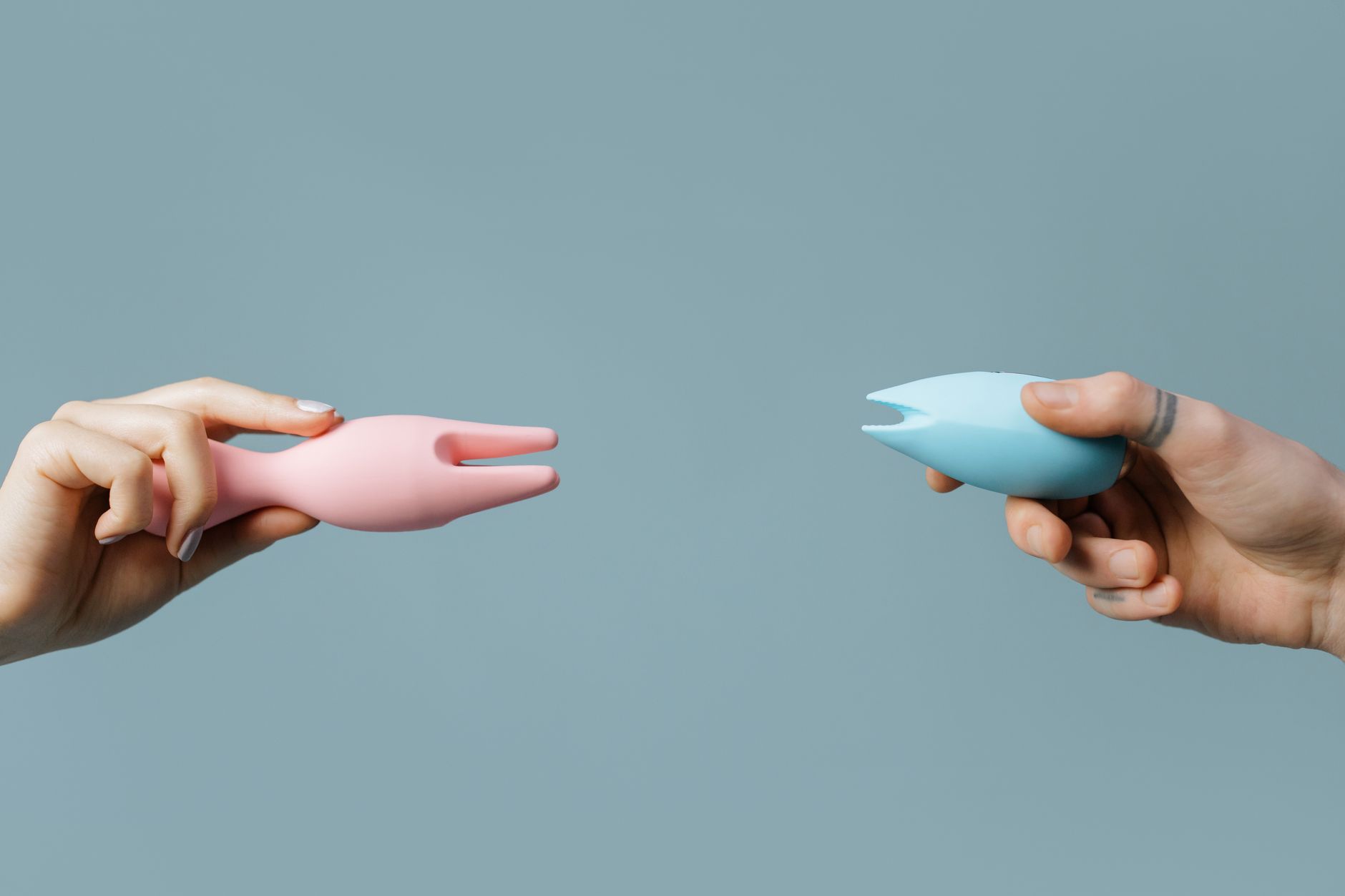
The Lem vibrator becomes a tool for this. Not to force your arousal faster, but to give your partner something satisfying to do while your body does what it naturally needs to do.
Why your arousal curves are different (and it's biology)
Most people with vulvas need 15-30 minutes of consistent stimulation to reach full arousal and lubrication. Most partners typically reach peak arousal in 3-5 minutes. You're not slow. They're fast. And both responses are completely normal.
The problem isn't the difference. The problem is what happens when it's unacknowledged. Your partner might read your slower arousal as disinterest (it's not). You might read their quick readiness as impatience (often it's just how their body works). Both interpretations tank the mood.
Add in the fact that many people feel awkward about asking for extended foreplay, and you've got a recipe for either rushed sex or a partner getting frustrated and withdrawing. Neither of those feels good.
Using a clitoral vibrator during this window shifts the dynamic completely. Your partner sees you actively engaged in your own pleasure. You get stimulation that your body responds to. You're not performing arousal or pretending to be ready. You're actually getting ready, together.
The setup: naming the gap without shame
Before you introduce the vibrator into this moment, have a conversation about it when you're clothed and not trying to have sex. Not because you need permission, but because clarity kills awkwardness.
Try something like: "I love when you initiate. I just notice my body takes a bit longer to catch up than yours. I want to find a way that feels good for both of us." That's it. No apology, no lengthy explanation.
Then you can say something like: "I'm thinking about using The Lem during foreplay so we're both enjoying ourselves while my body gets there." Most partners respond with relief. They want you to feel good. They were just unsure how to bridge that gap.
This conversation actually strengthens intimacy because it's honest and collaborative. You're not making them wrong for being quick to arousal. You're not making yourself wrong for needing time. You're just being practical.
How to use The Lem when your partner's ready first
Start with The Lem while your partner does what they naturally do. Kissing, touching, undressing. Their arousal doesn't need to wait for yours to catch up. Let them move at their pace while you use the vibrator.
Begin on pattern 1 or 2. You're not trying to chase an orgasm yet. You're trying to build sensation and lubrication. The suction motion of The Lem is particularly good for this phase because it creates consistent, gentle stimulation that builds slowly.
Your partner can touch you elsewhere while you use it. This keeps the connection and intimacy flowing. They might use their hands on your breasts, your neck, inside your thighs. The point is you're still in contact, still engaged. You're just not trying to fake arousal on their timeline.
After about 10-15 minutes of this, most people find that their arousal has caught up enough to transition. You might shift to penetration, or your partner might use the vibrator on you in a different way, or you might both use your hands. The moment doesn't have to follow a script.
The psychological shift that actually matters
Here's the real magic of this approach. Your brain stops seeing the time difference as a failure. You stop feeling pressure. Your partner stops wondering if they're doing something wrong. You're both actively engaged in something that feels good.
This is especially important because arousal is fragile. Pressure, self-consciousness, or a sense that something's "wrong" literally dampens your physiological response. The amygdala (your threat center) activates instead of your pleasure centers. Your body clamps down.
When you introduce the vibrator and say clearly "I need this to feel good," you're removing the shame. You're replacing the silent tension with action. Most couples find that sex becomes noticeably better after they normalize this once.
One more thing. If you consistently need 20-30 minutes of direct stimulation and your partner typically finishes in 10-15 minutes, this isn't just a foreplay problem. It might be worth thinking about what happens after. Some couples find that focusing on your arousal first, before partnered sex, works better. Others find that your partner coming first and then focusing fully on you changes everything. There's no one right way.
The specific patterns that work best during extended foreplay
The Lem has seven patterns, and different ones work for different phases of arousal.
In the early phase, when you're just starting to warm up, patterns 1 and 2 work well. They're gentle, consistent, and they won't desensitize you. You can stay on one pattern for several minutes.
As arousal builds, you might move to patterns 3 or 4. These add a bit more variation without jumping to anything intense. This is usually the sweet spot during extended foreplay because it holds your attention without rushing you toward climax.
Avoid jumping straight to patterns 5-7 if you're using the vibrator during the whole foreplay window. Save those for when arousal is more fully built. If you tire the tissue early with high-intensity patterns, you'll hit a sensation plateau that's hard to break through.
Take breaks. Use the vibrator for three to four minutes, then pause and let your partner touch you without it. This rhythm actually helps arousal build more sustainably than constant vibration.
When extended foreplay shifts to penetration
You've built arousal. Your body is ready. Now what.
Some people keep The Lem in use during penetration. You can hold it and use it while your partner is inside you, or your partner can hold it. If they're holding it, they can adjust the angle and pressure to suit what feels good, which often feels incredible.
Other people set it down and use fingers or hands for clitoral stimulation while your partner takes care of penetration. That works just fine.
And some people find that once arousal is fully built through extended foreplay, penetration alone is enough to take them to orgasm. The foundation matters more than the final stroke.
The throughline is this. You're not trying to force your body to move faster. You're building real arousal, with your partner actively engaged, using tools that actually work. That's not a workaround. That's smart, responsive sex.
What this solves in your relationship
Timing mismatches often hide real conversations couples need to have. When one person feels like they have to rush their arousal or the other person feels rejected, resentment builds fast. It doesn't feel like a mechanics problem. It feels personal.
Using The Lem and naming the gap directly removes that interpretation. You're showing your partner that you want them, that you're engaged, that you're taking your own pleasure seriously. You're also saying that you're not going to perform arousal you don't actually feel.
That kind of honesty actually deepens intimacy. You stop making sex about meeting expectations. You start making it about what actually feels good for both of you. From there, sex gets better.
Frequently asked questions
How long should extended foreplay actually take?
There's no magic number. For some people, 10 extra minutes makes a huge difference. For others, 20-30 is the real threshold. The point isn't to hit a time target. It's to stay in the moment until both people feel ready. Pay attention to lubrication, responsive breathing, and how your body is responding. Those are your actual signals.
What if my partner gets frustrated waiting for me to be ready?
That's worth a separate conversation, not just a sex technique conversation. If your partner consistently expresses frustration or impatience about your arousal timeline, that's a relationship issue worth exploring. A good partner wants you to feel good, not rushed. If you're not getting that, talking to a couples therapist might help. The Lem is a tool, but it's not a fix for incompatible attitudes about pleasure.
Can I use The Lem solo first to figure out what works for me?
Absolutely. In fact, that's a smart move. Spend time with it alone so you know exactly what patterns feel good, how long it takes you to build arousal, and what your own preferences are. Then you can speak from experience when you introduce it to partnered sex. That knowledge is power.
Is using a vibrator during foreplay a sign that something's wrong with our sex life?
No. It's a sign that you're paying attention to what actually works and you're being honest about it. Some of the best sex happens when people stop pretending and start using the tools available to them. The Lem vibrator is a sex toy, not a band-aid for a broken relationship.
What if we try this and it doesn't help?
Then you know that the timing mismatch isn't the real issue. Sometimes couples discover that the friction was actually about feeling unseen or disconnected. In that case, it might be worth talking to someone trained in couples communication. Sexual problems are often just relationship problems wearing a sexual disguise.
How do I bring this up without making my partner feel bad about being quick to arousal?
Frame it as a logistics problem, not a character problem. "Your body works fast, and mine needs a bit more time. Let's figure out how to make that work for both of us." That's collaborative. It's not "You're impatient" or "I'm broken." It's just "Here's what we're working with."
The bottom line
Timing mismatches are one of the most common friction points in partnerships. They're also one of the easiest to solve once you stop treating them as failures. Your body isn't wrong. Your partner's body isn't wrong. You're just different.
The Lem gives you a way to build arousal at your own pace while staying connected and engaged. It removes the pressure to perform and replaces it with something that actually works. From there, sex gets better for both of you.
If you're curious about how to make your pleasure a priority in your relationship, more broadly, we have some resources on emotional intimacy and sexual desire that dig deeper. And if communication about sex feels hard in your partnership, that's real, and it's worth addressing.
Your pleasure matters. Your timeline matters. Your partner's pleasure matters too. When you stop trying to sync those and start working with them, sex becomes a lot less stressful and a lot more fun.