Let's start with the real part
Negative sexual experiences leave a mark. Whether it was a one-time violation of boundaries, years of mismatched desire with a partner, coercion, or simply being made to feel ashamed of your own body, the aftermath is the same: you learn to mistrust your pleasure. You start to view your body as a problem to solve rather than a source of joy.
Rebuildingconfidence after that takes deliberate, self-directed work. And one of the most powerful tools I've seen my clients use is learning to pleasure themselves again, on their own terms, using a device that puts control entirely in their hands. The Lemon clitoral vibrator, with its air-suction technology, becomes less about intensity and more about gentleness, consent, and the slow relearning of what your body actually wants.
This isn't about trauma therapy (that's what your therapist is for). This is about the practical, physical side of reclaiming your body as yours.
Why this moment is different from before
When you're building sexual confidence from scratch, the biggest barrier isn't usually physical responsiveness. It's psychological safety. You need to know, beyond question, that you have complete control. You can stop. You can pause. Nobody is pressuring you. No one is watching or judging.
Solo play with the right device offers exactly that. And here's the thing: lemon vibrators specifically work well for this because they don't demand anything from you. Traditional vibrators can feel aggressive, even when they're set to low. The Lem's suction technology creates a gentler, more intuitive sensation. You're not being stimulated by force. You're being supported by a device that responds to your body, not the other way around.
That psychological shift matters more than the physical mechanics.
Starting with permission, not pressure
If negative experiences have taught your brain that pleasure is risky, you'll need to rewire that message slowly. Begin by framing solo time not as a goal to reach orgasm, but as a practice in feeling safe in your own body.
Set a time when you know you won't be interrupted. Not an hour. Twenty minutes. Alone, door closed, phone on silent. The ritual matters as much as the practice.
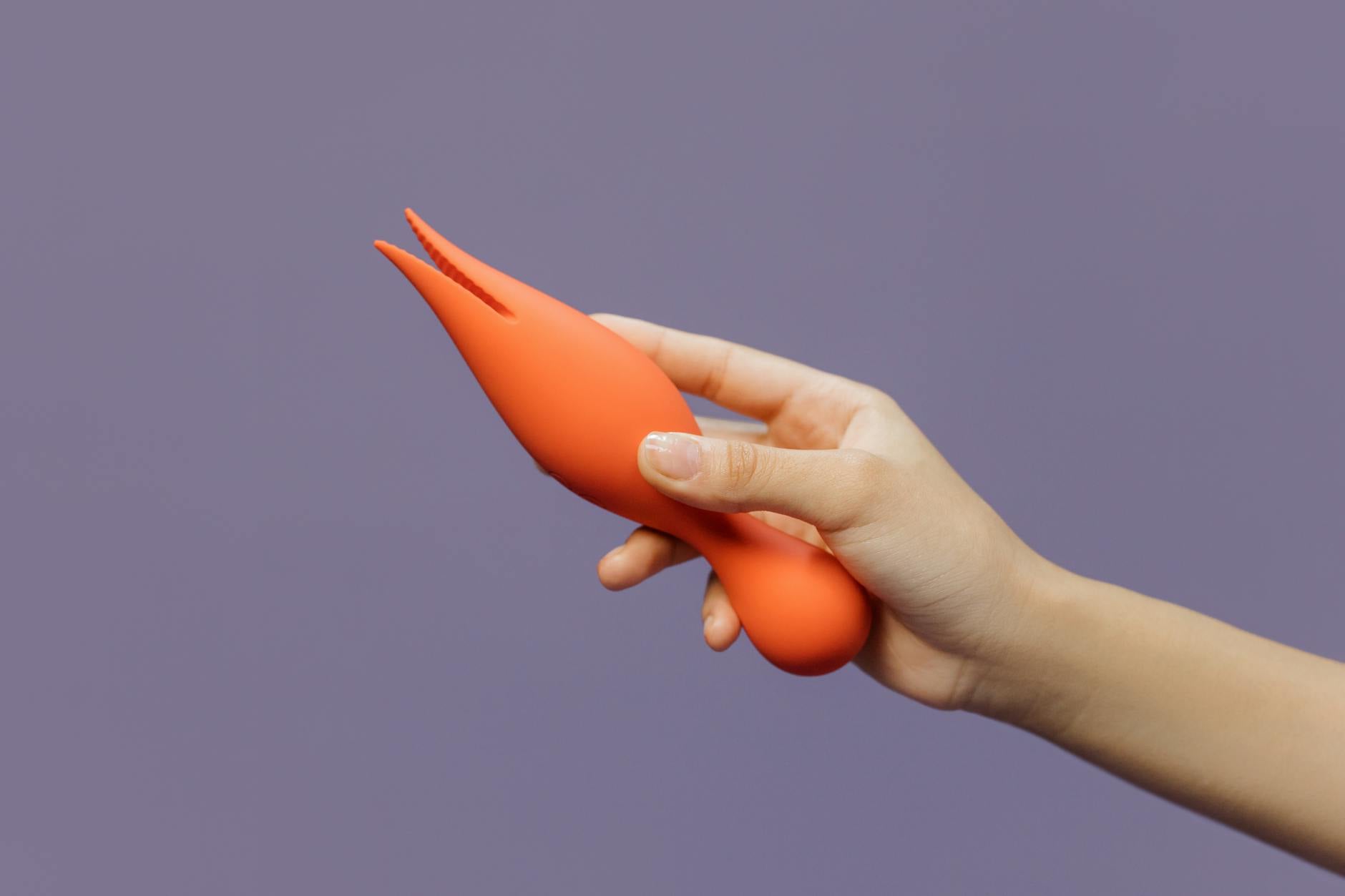
Hold the Lem. Don't turn it on yet. Feel the weight of it. Feel the silicone. Notice that it's an object you control. You can put it down anytime. There's no expectation. Spend a few sessions just acclimating to having it near your body before you activate it.
This sounds slow. It is. And it's exactly the pace that rebuilds the neural pathways that trauma or shame interrupted.
The gentleness part: why suction changes the game
Lemon clitoral vibrators use air-suction technology rather than traditional vibration. What does that mean for confidence rebuilding? It means the sensation is less jarring and more responsive to your body's own rhythm.
When you're nervous about pleasure, a traditional vibrator can feel like you're fighting against the device. With suction, you're working with it. The sensation builds gradually. It's not forcing arousal; it's coaxing it.
Start on the lowest setting. Level one. The Lem has multiple patterns, and most people rebuilding confidence never need to go higher than pattern two or three. You're not trying to prove anything to yourself or reach some benchmark of intensity. You're practicing the thought: "My body can feel good, and I chose this."
That last part. I chose this. Hold onto it.
Building arousal without shame
One of the hardest parts of rebuilding confidence is unlearning the shame loop. Here's how it typically works: you start to feel aroused, and then your brain says, "Wait, is this okay? Am I allowed to want this?" That doubt kills the arousal. Then you feel bad about the killed arousal. Then you feel bad about feeling bad. Three minutes in, you're in your head instead of in your body.
Solo play interrupts that loop because there's no audience, no judgment, no one to perform for.
Allow yourself to feel arousal without needing to do anything with it. Use the Lem for five minutes and stop. Not because you're bored. Just because you're practicing the idea that pleasure is available to you on demand, not something you have to earn or justify.
Do this three or four times before you try to reach orgasm. Let your nervous system settle into the fact that seeking pleasure isn't reckless or wrong. It's yours.
When sensation feels blocked or distant
Some people who've experienced sexual hurt report that their body feels numb or far away during intimate moments. This dissociation is protective. Your nervous system is trying to keep you safe. But it also means pleasure feels inaccessible.
When you're using a lemon vibrator as part of rebuilding, you're asking your body to slowly rejoin the room. Start with the device on your inner thigh or lower abdomen, not directly on the clitoris. Notice the sensation without forcing an emotional response to it. "I feel this. It's warm. It's gentle." Describe it like you're narrating a nature documentary about your own body.
Then move closer. Maybe the outer labia. Then the clitoral hood. Work inward over weeks, not hours. Each small area of contact is a negotiation between you and your nervous system: "Is it safe to feel here?"
Most of the time, the answer becomes yes. But only when you move at your own pace.
Building capacity for pleasure alongside a partner
If you want to eventually bring pleasure back into partnered sex, solo practice with the Lem is the bridge. You learn what your body responds to. You practice asking for what you want. You build the muscle memory of communication.
Then, when you're ready, you show your partner. Not as a performance. As information. "Here's what I've learned feels good. Here's my pace. Here's where I need you to wait."
This is radically different from trying to rebuild pleasure while someone else is watching or participating. Solo play gives you the data you need to eventually trust a partner with your pleasure again. Many of my clients find that this solo confidence is the exact thing that allows them to feel safe partnered again.
The emotional work underneath
Using a lemon clitoral vibrator is physical practice. But it's also emotional reprogramming. Every time you use it, you're telling your nervous system: "I am safe. I have control. My pleasure is worth protecting."
That message needs to repeat dozens of times before your body believes it. That's not weakness. That's neuroscience. Trauma rewires your threat-detection system. Reclaiming pleasure rewires it back.
Some days you'll feel aroused and confident. Some days you'll feel blocked and frustrated. Both are normal. The work isn't about consistency; it's about showing up.
If at any point pleasure brings up intense emotions, intrusive memories, or panic, pause. That's not failure; that's information. It might be time to talk with a therapist who specializes in sexual trauma. There's no shame in needing professional support alongside your solo practice.
When you're ready to move faster
Once you've built a baseline of comfort, you can explore. Try different patterns on the Lem. Try longer sessions. Try breathing techniques that help bring you deeper into your body.
You might discover that orgasm feels easier now. Or that it still feels distant, and that's okay too. The goal isn't orgasm. The goal is agency. It's your body being a source of curiosity and joy instead of fear.
If you're ready to bring pleasure back into partnered intimacy, that's a separate conversation. Check in with yourself first: Do I feel safe with this person? Do I trust them with my body? Have I communicated my boundaries clearly? If the answer to all three is yes, then you've done the hard work already.
FAQ: Rebuilding Pleasure and Confidence
How long does it take to rebuild sexual confidence after trauma?
There's no standard timeline. Some people notice shifts in weeks; others take months. The work is nonlinear. You might feel great one week and flooded the next. Both are part of the process. What matters is consistency, not speed. Show up for yourself regularly, and your nervous system will gradually learn to trust pleasure again.
Is it normal to feel guilty using a vibrator after negative sexual experiences?
Completely normal. If you've been shamed about sexuality, pleasure can feel like you're doing something wrong. Remind yourself: using a device you control, alone, on your own terms, is the opposite of what hurt you. It's an act of reclamation. The guilt is old programming. Keep using the Lem anyway, and the guilt usually softens over time.
Can I use the Lem if I have trauma-related pain during sex?
It depends on the type of pain. If it's physical pain like vaginismus or vulvodynia, a sex therapist or pelvic floor specialist is your first stop. If it's psychological tension that turns into physical tightness, solo play with the Lem at low intensity can help you distinguish between physical sensation and fear. Start slow. Stop if something hurts.
Should I tell my partner I'm using a lemon vibrator for rebuilding?
That's your call. Some people want to keep solo play entirely private. Others want their partner to understand the work they're doing. There's no right answer. What matters is that you're doing this for you, not for your partner's approval. If you do tell them, frame it as: "I'm rebuilding confidence in my own pleasure. This is part of my process."
What if I still can't feel arousal after consistent practice?
Persistently low arousal after trauma can point to unprocessed nervous system activation. Work with a therapist trained in somatic or trauma-informed practices. They can help you access the places where your body is still protecting itself. Solo play supports that work but can't replace it.
How do I know when I'm ready to bring pleasure back into partnered sex?
You're ready when: you can find arousal solo without shame, you've set clear boundaries in your current relationship, you trust your partner with your vulnerability, and you feel curiosity rather than fear about partnered intimacy. If any of those feels uncertain, you're not ready yet. And that's wisdom, not failure.
The bigger picture
Reclaiming your sexuality after hurt is an act of resistance and self-care all at once. Every time you use your lemon vibrator and feel safe, you're telling your past: "You don't get to decide what I deserve anymore."
That's powerful. Take your time with it. Your pleasure is waiting for you, and it's not going anywhere.
If rebuilding feels overwhelming or you're stuck, reach out. A therapist specializing in sexual health can offer support that goes deeper than what solo practice alone can provide. Get in touch with resources that fit your needs.