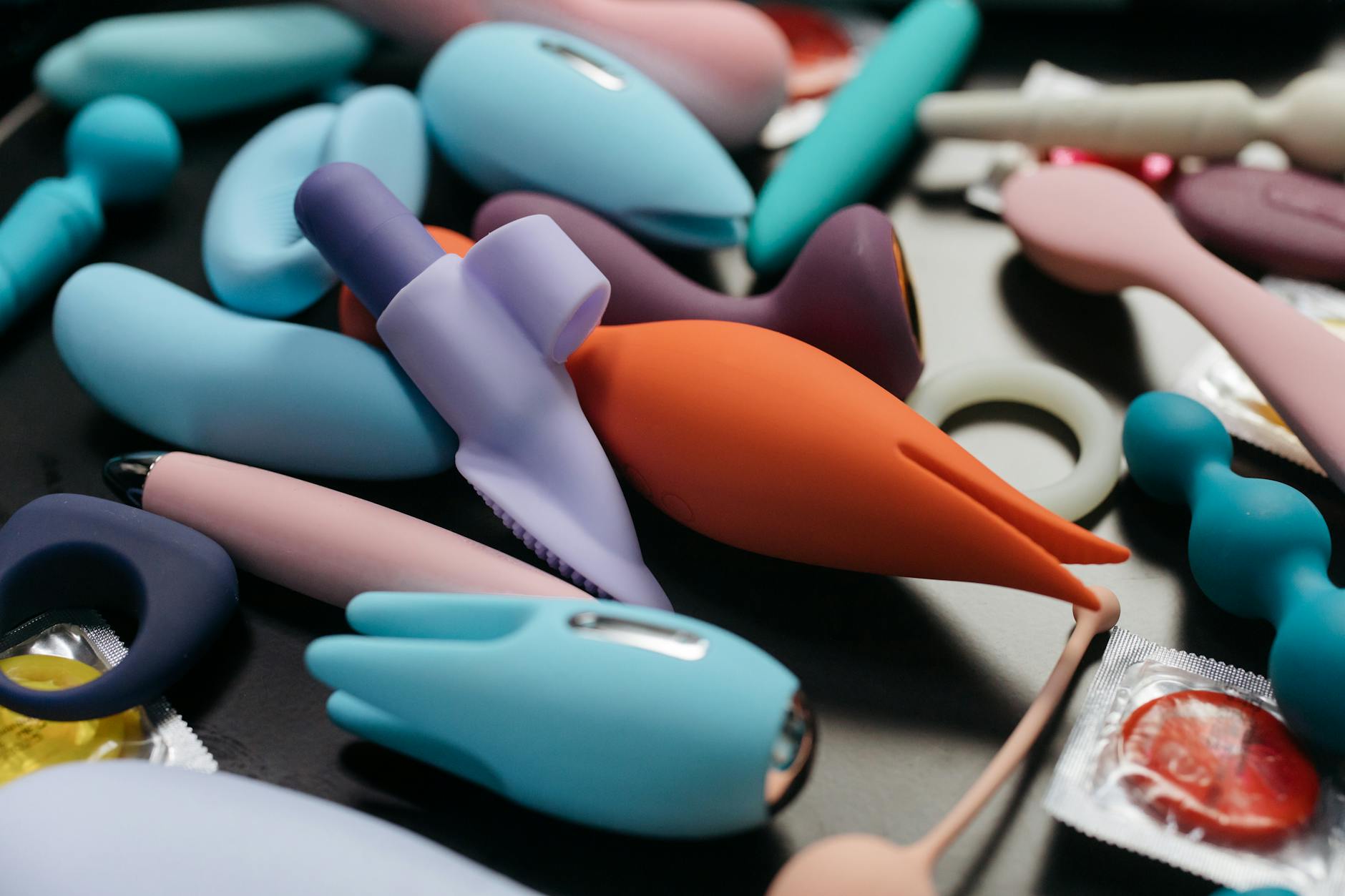
Here's the thing about solo pleasure
It's supposed to be the easiest version. No one else's timing, no negotiation, no performance pressure. And yet so many people find that flying solo actually feels harder to navigate. One day you're there, the next day you're not. The technique that worked last week feels different this week. Your body responds one way on a Tuesday morning and completely differently at night. It's enough to make you wonder if you're doing something wrong.
You're not. What you're experiencing is normal variability. But it's also fixable. When you understand what actually drives consistent pleasure in solo sex, you can build a reliable practice instead of chasing random hits.
Let me break down what I've learned from years of coaching people through this exact frustration.
Why solo pleasure feels inconsistent in the first place
Your body is not a light switch. It's a complex system with dozens of variables. Stress, sleep, hydration, where you are in your cycle, what you ate, whether you've exercised, how your day went. All of that changes how easily arousal builds and how your nervous system responds to stimulation.
The mistake most people make is treating inconsistency as a personal failure. "I used to come easily and now I don't." "Last time felt amazing and tonight feels flat." "What's wrong with me?" Nothing is wrong with you. Your baseline is genuinely shifting based on factors you can't always control.
But here's what changes the game: when you use the right tool and build a consistent ritual around it, you actually create a neurological shortcut. Your brain and body learn the pattern. They start to anticipate what's coming. That anticipation is what transforms solo pleasure from hit-or-miss to reliable.
The science of why the right vibrator matters
Not all stimulation is created equal. A clitoral vibrator works differently than your hand or other toys because of how it interacts with the thousands of nerve endings in your clitoris. The Lem, specifically, uses air-pulse technology that creates a gentle suction sensation. That matters because it doesn't require you to hold pressure or angle your hand in a particular way. You can relax more completely.
When your pelvic floor is relaxed, arousal builds faster. When you're not managing hand fatigue or arm positioning, you can stay present. When you're present, your nervous system can actually complete the arousal cycle. All of that adds up to consistency.
The other thing that lemon clitoral vibrators do well is create a sensation that's psychologically distinct from your own touch. Your brain actually responds differently to external stimulation. It's one of the reasons so many people find that vibrator use feels different from solo touch. Not better, necessarily. Different. And that difference can be exactly what your nervous system needs to move from arousal into release.
Building your baseline ritual
Consistency starts with ritual. Not in a mystical way. In a neurological way. When you create a predictable sequence, your body starts to anticipate each step. That anticipation is arousal building before you even touch yourself.
Here's a framework that works.
Set a time that's realistic for you. Not when you're exhausted. Not when you're rushed. A time when you can give yourself fifteen to twenty minutes without interruption. If that doesn't exist in your life right now, that's a separate conversation. But if it does exist, protect it. Same time of day, same place if possible.
Start with something that signals to your body that this is different from your regular day. A shower. A specific playlist. Dimming the lights. Ten minutes of sitting with a journal and your thoughts. Something that creates a mental boundary between "I'm in my day" and "I'm in my pleasure."
Then: lubrication. Always. Even if you don't think you need it, use it anyway. Water-based lube reduces friction and changes the sensation in a way that often makes everything feel better. It also gives you something to do with your hands while your brain settles.
Then explore. Not jump straight to the Lem or whatever clitoral vibrator you're using. Spend three to five minutes touching yourself with your hands. Notice where sensation is strongest. Notice what kind of pressure feels good. Notice your breath. This isn't foreplay. It's reconnaissance. You're learning what your body wants that particular day.
Then bring in the lemon vibrator. Start on the lowest setting. Move slowly. Most people rush this part. They jump to the sensation level that got them off last time. Your body is different today. You don't know exactly what setting will work. So you explore.
The pressure point that changes everything
Here's a detail that most guides skip but makes a massive difference: where you place the vibrator matters more than the intensity setting.
The clitoris is bigger than you probably think. It extends internally, behind the visible tissue. Most people find that direct contact on the visible area is actually too intense. Slightly off to one side, or lower, just at the edge of where it meets the rest of your vulva. That's where most people find the sweet spot.
With the Lem or any lemon clitoral vibrator, you're not mashing it into one spot. You're holding it gently and exploring. Small movements. Small adjustments. You might find that moving it in tiny circles feels better than holding it still. You might find that angling it slightly changes everything.
This exploration is not wasted time. It's training. Every time you do this, you're teaching your nervous system where pleasure lives in your body. You're building a map. That map is what creates consistency.
The rhythm that works
Once you find a setting and a spot that feels good, stay there. This is the part where patience matters. Most people have learned that pleasure is supposed to build quickly. That orgasm is supposed to be the goal. If it doesn't happen in five minutes, something's wrong.
That's not accurate. When you're building a consistent practice with a clitoral vibrator, you might spend eight to ten minutes in that space where sensation is building but you're not at the edge yet. That's not a problem. That's the process.
Your brain is integrating the sensation. Your nervous system is settling into it. Your arousal is deepening. All of that makes the final push more reliable when it comes.
When you feel yourself getting close, here's where most people panic. They either try to push harder or they second-guess themselves. Instead: keep going. Same setting. Same spot. Same gentle rhythm. Your nervous system knows what to do. Trust it.
What changes and what stays the same
Some days you'll reach orgasm in twelve minutes. Some days it'll take twenty-five. Some days you'll reach it and then feel like going again. Some days once is more than enough. All of that is completely normal.
The thing that stays the same is the ritual. You show up at roughly the same time. You go through roughly the same steps. You use the same tool. Your body learns that pattern, and within that pattern, there's room for all kinds of variability.
One more thing: some days you'll use the lemon vibrator and not reach orgasm. That's not failure. That's just a day when your nervous system isn't moving toward release. That's fine. You got sensation. You got time alone. You got practice staying present. All of that counts.
When something shifts
Your baseline will change. Your cycle shifts. Your stress level changes. You hit a birthday. All of that can reset what feels good. When that happens, you don't need to panic. You just need to go back to exploration.
Spend a few sessions not focused on the orgasm goal. Use the lemon vibrator to explore. Try different settings, different placements, different rhythms. Your body is still yours. It just needs you to listen to it right now instead of expecting it to operate the way it did last month.
If you're interested in expanding your solo practice beyond what a clitoral vibrator can offer, you might explore other approaches. If inconsistency is tied to something like mismatched libido with a partner, that's a different conversation. But for pure solo pleasure consistency, this framework works.
FAQ: Consistent Solo Pleasure With Lemon Vibrators
How long should I spend exploring with a lemon vibrator before I expect to reach orgasm?
Most people need between twelve and twenty minutes of actual stimulation to build reliable arousal and reach orgasm. That doesn't count the ritual time before. When you're starting, allow thirty to forty-five minutes total so you're not rushing. As your body learns the pattern, it often gets faster, but slow is not the enemy here.
What if I use my clitoral vibrator regularly but still feel inconsistent?
Inconsistency usually points to one of three things: you're not in the same mental state each time (stress, distraction, or fatigue is different), you're changing the ritual (time of day, location, or the sequence before you use the vibrator), or you're starting with too high an intensity and your nervous system is bouncing back. Try locking down the first two and dropping the vibrator intensity to pattern one or two for a full week. Consistency often comes back quickly.
Can I use a lemon vibrator every day without damaging my ability to come without one?
Yes. Using a lemon clitoral vibrator daily doesn't rewire your body so you can't experience pleasure other ways. Your nervous system is flexible. You can use a vibrator most days and hands or partner touch other days without any problem. What matters is that you're not using the vibrator as a substitute for actual arousal building. If you're jumping straight to pattern four on the Lem without the earlier steps, you might be training your nervous system to expect that intensity. But a well-used vibrator? That's just one part of your pleasure toolkit.
Why do some sessions feel amazing and others feel flat even when I do the exact same thing?
Because your body isn't static. Hydration, sleep, where you are in your cycle, whether you've exercised, stress level, whether you ate. All of that changes how your nervous system responds. The ritual creates consistency, but the experience will always have variance. That's not bad. That's being human. The more sessions you complete, the more you stop expecting every one to feel identical and just enjoy whatever you get that day.
Is it normal to want solo pleasure more than partnered sex?
Completely normal. Solo sex has advantages that partnered sex doesn't. You don't have to manage anyone else's needs. You know exactly what you want. There's no pressure. You can take as long as you want. Some people genuinely prefer it. Some people want both. There's no wrong answer here.
How do I know if my clitoral vibrator is the right one if I'm not getting consistent results?
First, give any new vibrator at least five to ten sessions before you judge it. Your body needs time to adjust to a new sensation. Second, if after two weeks you're still not experiencing any pleasure, it might be the wrong tool. The Lem works for most people because of how air-pulse technology feels, but not everyone responds the same way. If you're not getting results, you might try a different style. But more often, inconsistency isn't about the vibrator. It's about the ritual and the mental state you're bringing to it.
Build the pattern, enjoy the variability
Consistent solo pleasure isn't about perfect orgasms every time. It's about creating conditions where pleasure becomes reliable. You show up. You follow the ritual. You use a tool that actually works for your body. You give yourself time. Within that structure, everything else can vary. Your mood. Your pace. Your sensations. Your outcome. All of that gets to be different.
That's the version of solo sex that actually feels sustainable. Not rigid. Not pressured. Just reliable. If you want to deepen your practice or explore new dimensions of solo pleasure, I'd love to talk through what that could look like. Reach out anytime.