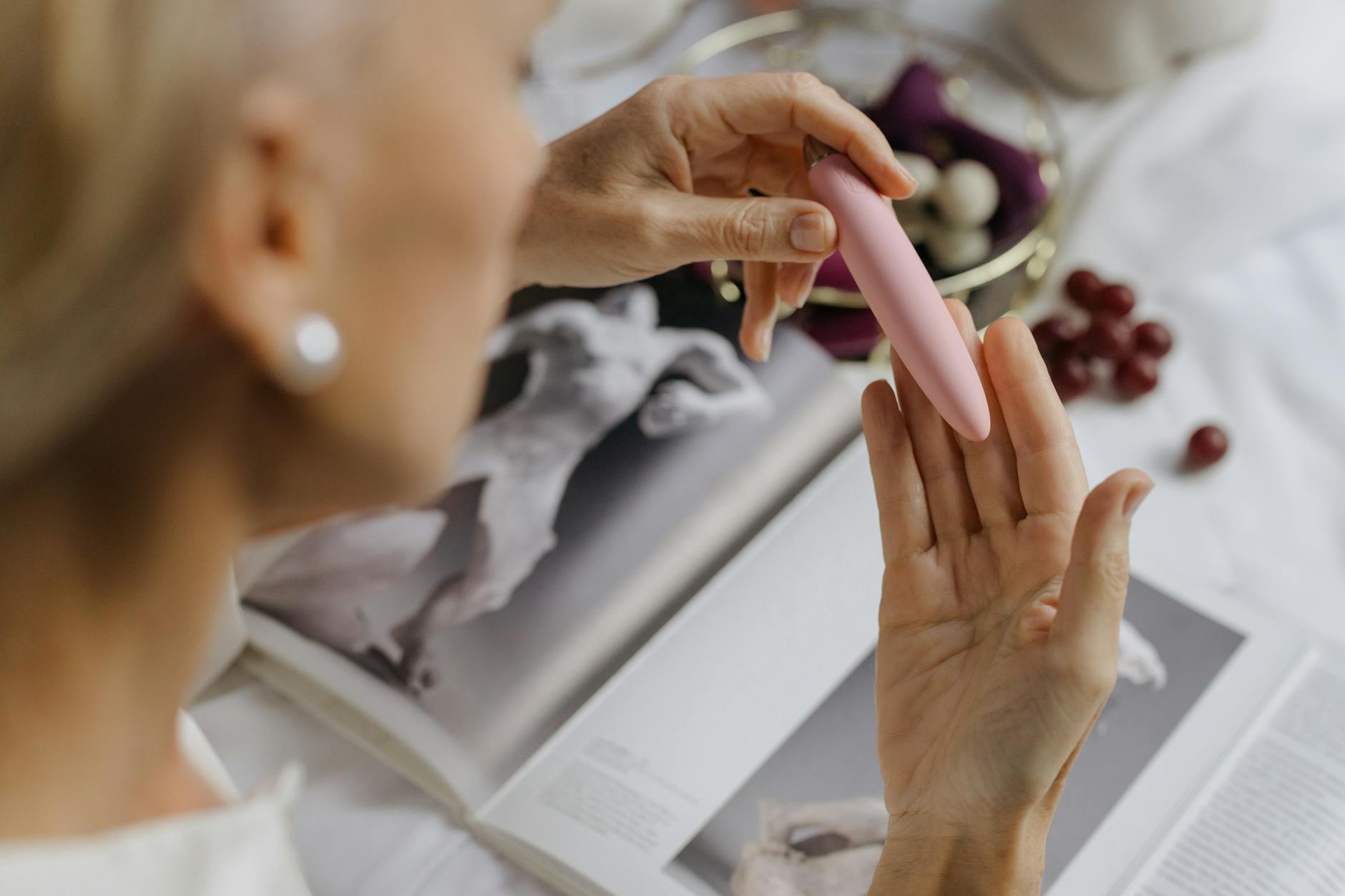
How to Use Lemon Vibrators When Physical Sensation Changes During Perimenopause
Perimenopause hits differently than menopause itself. It's not a cliff. It's a slope, and it's steep, and it's full of weeks where you don't recognize your own body.
One month your arousal ramps up in minutes. The next month it takes 20 minutes and feels muted when it arrives. Lubrication becomes inconsistent. Tissue sensitivity changes mid-cycle. Your partner notices. You notice. And suddenly using the same vibrator the same way feels wrong in a way you can't quite name.
Here's what I want you to know: this is not a problem to fix. It's a signal to listen to. And when you understand what's actually changing, using lemon clitoral vibrators becomes easier, not harder.
What actually shifts during perimenopause
Hormone fluctuation is the baseline. Estrogen is rising and falling erratically instead of following a steady cycle. This affects literally everything related to arousal and sensation.
Tissue thinning starts earlier than people think. You don't have to wait for menopause. The vaginal and vulvar tissue begins to lose elasticity and thickness as estrogen availability drops, even while you're still menstruating. This makes direct friction feel different. Sometimes more intense. Sometimes less responsive.
Lubrication becomes unpredictable. One week you're fine. The next week you need lube even with extended foreplay. This isn't weakness. This is biology. And it changes how a lemon vibrator should be used.
Blood flow to genital tissue also fluctuates. This affects how quickly arousal builds and how intensely you feel stimulation. Some days sensation is sharp and immediate. Other days you feel like you're touching yourself through a blanket.
Your pelvic floor tightens. Hormonal changes make pelvic floor tension more common during perimenopause. This changes how orgasms feel and can make direct clitoral stimulation feel overstimulated more easily.
Why lemon vibrators are especially useful right now
Most vibrators work through direct vibration on tissue. A lemon clitoral vibrator uses suction and pulsing instead. This matters for perimenopause bodies for three specific reasons.
First, suction doesn't require the same tissue elasticity that friction does. If your tissue is thinning, direct vibration can feel raw or uncomfortable. Suction stimulates the nerve endings without that grinding mechanical pressure. The Lem vibrator creates a gentle seal that feels consistent regardless of tissue changes.
Second, suction builds arousal differently. It creates a building sensation rather than a direct hit. During perimenopause, when arousal might feel scattered or delayed, this ramping effect often works better than a vibrator that goes straight to full intensity.
Third, suction is easier to adjust. You can control the seal strength, the suction level, and the pattern independently. When sensation is unpredictable, this flexibility matters. You're not locked into one type of stimulation.
How to adapt your technique as sensation shifts
Start with the lower patterns. The Lem vibrator comes with multiple suction and pulse intensities. During perimenopause, I recommend beginning at patterns 1 through 3 instead of jumping to 5 or 6. Your tissue might be sensitive in ways it wasn't before.
Wait longer before increasing intensity. Arousal builds slower during perimenopause. Give yourself 10 to 15 minutes at a lower setting before moving up. This gives your body time to respond and your nervous system time to settle into sensation.
Use lube deliberately, not as an afterthought. Water-based lube works best with silicone toys and makes a dramatic difference during perimenopause. Apply it to the toy itself, not just to your tissue. The combination of suction and lube creates a seal that prevents the raw feeling that friction alone can cause.
Experiment with angle and pressure. The flexibility of how you position a lemon clitoral vibrator lets you find what feels good on any given day. Some days light contact with the suction at setting 2 is perfect. Other days you need fuller contact and pattern 4. Neither is wrong. They're just different.
Stop when sensation flattens. If you've been at this for 15 minutes and arousal hasn't built, or if sensation suddenly feels numb, stop. This is often hormonal. Pushing through doesn't work. Come back later in the day or the next day. Your body's not broken. The hormone timing is just off right now.
The mental shift that changes everything
Here's the part that nobody tells you about perimenopause and pleasure: the frustration isn't really about the physical changes. It's about the loss of predictability.
For years, maybe decades, you knew how your body worked. You knew what turned you on. You knew how long it took. You knew what made you come. And now you don't. Some days your usual moves work fine. Other days they feel weird or too intense or not intense enough.
This loss of predictability can actually kill arousal faster than any tissue change.
The fix is acceptance without resignation. Your body isn't broken. It's changing. And you get to learn it again. This time, you know more. You have better tools. The Lem vibrator, for example, gives you more control and more feedback than a standard vibrator. Use that.
Also: give yourself permission to want different things on different days. One day you want to use a lemon sucker for 5 minutes and move on. Another day you want 30 minutes of slow building sensation. Neither one is the "right" way. Both are valid.
Common perimenopause friction points and how to solve them
Feel like you go from zero to numb.
This usually means arousal is building, but sensation is flattening before you reach a peak. Solution: use the Lem vibrator at a lower pattern than you think you need, but extend your time. Give your body 20 to 25 minutes instead of 10. The extended gentle stimulation often works better than short high-intensity sessions during this phase.
Feeling raw or sore afterward.
This is usually a tissue sensitivity issue, not a vibrator problem. Use lube more generously. Reduce the suction strength (try patterns 1 to 2 instead of 4 to 5). And consider whether you're using the vibrator too frequently. During perimenopause, sometimes two or three times a week works better than daily.
Partner notices you're less responsive.
This is real, and it's worth naming directly. Arousal slowdown during perimenopause isn't about your partner or your relationship. It's hormonal. Using a lemon clitoral vibrator together, with your partner involved or aware, often actually helps. It removes the pressure for them to "do something" to make you ready faster. You're using a tool that works with your body's current tempo, not against it.
Arousal feels scattered and unfocused.
During some weeks of the perimenopause cycle, arousal feels diffused across your whole body instead of concentrated. A suction-based vibrator often helps here because it anchors sensation to one clear point. This focus can actually help scattered arousal consolidate into something purposeful.
When to check in with your doctor
If sensation has completely disappeared and hasn't returned in a week, mention it at your next checkup. Significant sensation loss during perimenopause sometimes points to thyroid issues or other hormonal imbalances that are worth addressing.
If pain appears during or after using a vibrator, stop immediately. Some perimenopause-related tissue changes can make direct stimulation uncomfortable. A gynecologist can evaluate whether you have genitourinary syndrome beginning (common during perimenopause, very treatable) or whether you need a different approach.
If arousal has become almost impossible and it's affecting your mood or relationship, mention it. Perimenopause can sometimes involve mood shifts that dampen desire. There's help available. It might be as simple as adjusting other medications or as direct as testosterone therapy. Worth exploring.
The long view
Perimenopause is the anteroom to menopause, not the destination. And lots of people find that pleasure actually deepens on the other side of it. The years I spent adjusting to perimenopause changes taught me about my own body in ways I never would have learned otherwise. I found positions that worked better, tools that worked better, and honestly, a kind of permission to want what I wanted without apologizing for it.
A lemon clitoral vibrator is not a workaround for perimenopause changes. It's a tool that adapts when your body is adapting. You're learning your body again. That's not starting over. That's going deeper.
People also ask
Is it normal for sensation to feel different during perimenopause?
Completely normal. Perimenopause involves fluctuating estrogen, which affects tissue elasticity, blood flow, and nerve sensitivity. Some weeks sensation feels sharp and responsive. Other weeks it feels muted or overstimulated. This variability is one of the hallmarks of perimenopause. It usually settles more in menopause itself, but during perimenopause the ups and downs are part of the deal.
Can I still use my regular vibrator during perimenopause?
Yes, if it still feels good. But many people find that how to use lemon vibrators when sensation feels muted or numb addresses the specific challenges perimenopause creates. A suction-based vibrator like the Lem often works better than traditional vibrators when tissue is thinning or sensation is unpredictable. Try it if your current tool starts feeling less comfortable.
Does lube help with perimenopause dryness?
Yes, but not in the way you might think. Lube doesn't fix the underlying tissue change, but it makes penetration and stimulation feel significantly better. During perimenopause, applying lube directly to the toy (not just your tissue) before using a lemon clitoral vibrator creates a better seal and reduces the raw or uncomfortable feeling that friction can cause. Water-based lube works best with silicone toys.
How often should I use a vibrator during perimenopause?
There's no hard rule, but many people find that two to three times a week works better than daily during perimenopause. Frequent use can sometimes exacerbate rawness if tissue is sensitive. Pay attention to how your body feels afterward. If you're sore, back off frequency. If you feel great, the frequency is fine.
Will perimenopause sensation changes affect my ability to orgasm?
Often no, but differently. Many people report that orgasms feel different during perimenopause. Sometimes weaker, sometimes more localized instead of full-body. Sometimes they take longer to reach. This doesn't mean you can't have them. It means you might need to adjust your approach, your timeline, and your expectations. How to use lemon vibrators when orgasm feels harder to reach walks through specific strategies that work well during this phase.
Should I tell my partner about perimenopause changes affecting pleasure?
Yes, ideally. Perimenopause sensation changes aren't your fault and aren't your partner's fault. Naming them directly removes a lot of confusion and pressure. You might say something like, "My body's going through changes that are making arousal slower and sensation different. I want to stay connected, and I might need more time or different approaches right now." That clarity is better than silent frustration on both sides.
Can perimenopause changes be permanent?
Some yes, some no. Tissue thinning and reduced lubrication tend to persist after menopause. Arousal slowdown sometimes eases once hormones stabilize. The key is that perimenopause is a transition phase. You're not stuck here. Your body will settle into a new normal. Until then, tools like the Lem vibrator help you work with your body's current reality instead of fighting it.