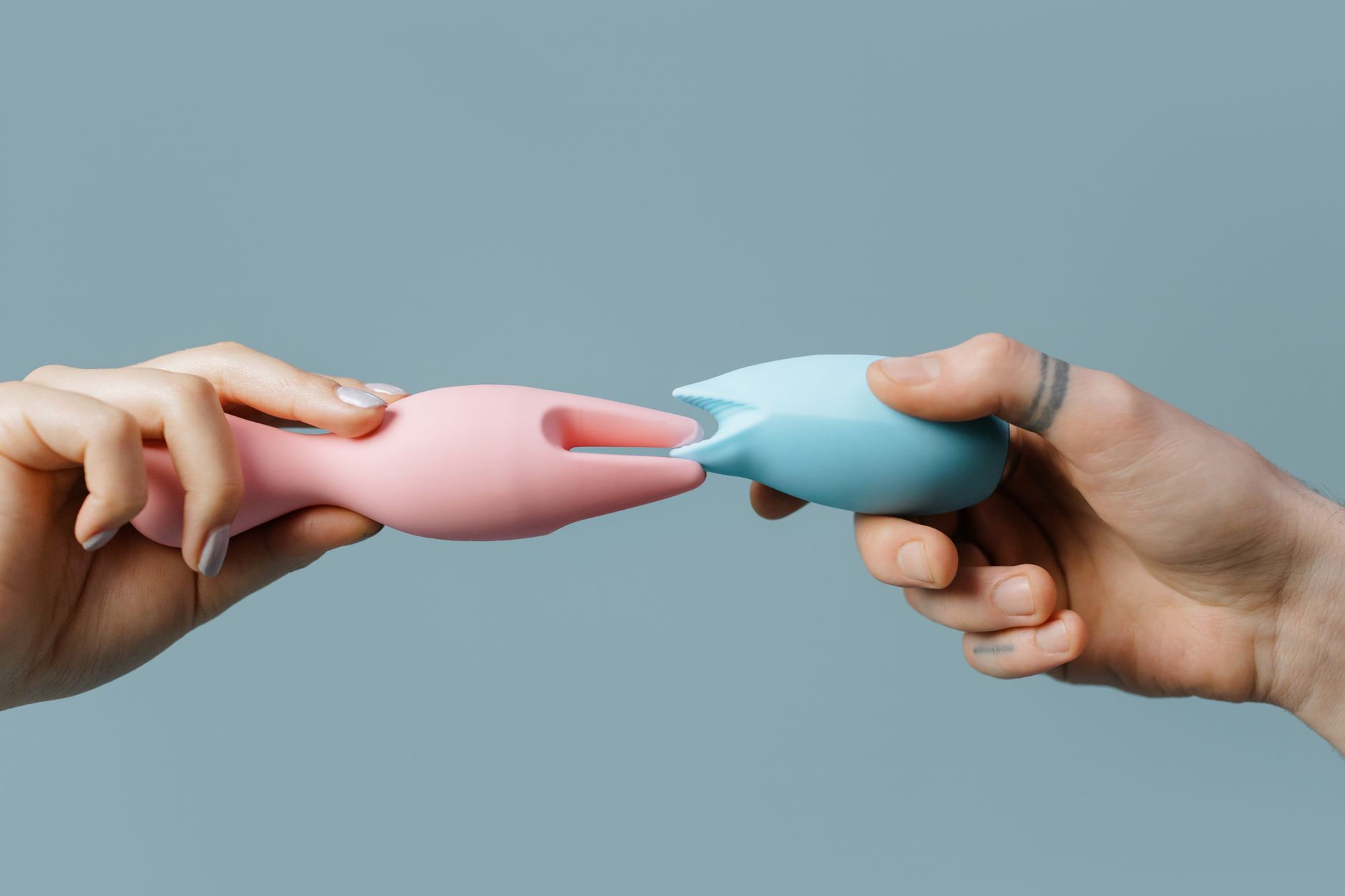
When desire comes back, it's not always what you expect
Let's start here: the fact that you're thinking about pleasure again is significant. Depression doesn't just flatten mood. It erases wanting. When your brain chemistry shifts back toward baseline, desire can feel like a stranger knocking on the door after months of silence. Some people describe it as relief. Others feel confusion, awkwardness, or even guilt. All of that is normal.
The tricky part isn't that desire is back. It's that your body and mind might be operating on different schedules. Your libido wakes up at 6 a.m. Your sense of safety follows three hours later. Your ability to relax in your own skin trails behind that. This guide is about working with that timeline, not against it.
Why desire and sensation can lag behind each other
Depression and some antidepressants both affect the nervous system. When you're recovering, your body is essentially relearning how to feel safe. Desire might spark, but arousal doesn't always follow immediately. Genital sensation can feel muted. Orgasm can take forever or disappear entirely. This isn't a sign that you're broken or that pleasure is gone forever. It's a sign that your system needs time to recalibrate.
If you've been on SSRIs, SNRIs, or other medications that affect dopamine and serotonin, those can continue to dampen sexual response even after mood improves. Some antidepressants are worse offenders than others. If you're on a medication that's actively suppressing sensation, talk to your prescriber about switching timing (taking it at night instead of morning) or adjusting the dose. Don't stop cold turkey. But a conversation is worth having.
The bigger picture: desire returning doesn't mean you're instantly back to how you were before depression. You're not the same person who went in. You're someone new, with a nervous system that's learned to protect itself. Pleasure recovery looks different for everyone, and that's exactly how it should.
Start with permission, not performance
Here's what I tell clients in session. Before you touch The Lem, before you think about technique or settings or anything tactical, you need to give yourself explicit permission to have pleasure that looks nothing like it used to.
Permission to have desire without being ready for partnered sex. Permission to feel arousal and then lose it halfway through. Permission to use a lemon clitoral vibrator and feel nothing for the first three times. Permission to take six months. Permission to not be grateful or excited about it right now, just curious.
Why does this matter? Because your brain is probably already running a background program that goes something like: "I should be happy about this" or "I need to perform recovery correctly" or "What's wrong with me that it still doesn't work?" That program runs quietly. It sabotages sensation.
The fastest way back to genuine pleasure is to remove the pressure to have it. Seriously. I've worked with dozens of people on the other side of depression, and the ones who reconnect with pleasure quickest are the ones who explicitly said to themselves: "I'm doing this with no goals. No orgasm required. No performance. Just information."
Use The Lem as a feedback tool, not a fix
Lemon clitoral vibrators, including The Lem suction vibrator, work brilliantly for sensation recovery because they're non-directional stimulation. Traditional vibration can feel either too intense or completely absent when your nervous system is recalibrating. Suction works by drawing tissue into the head without harsh friction. It's gentler to reawaken sensation.
Start with The Lem on the lowest setting. Lowest. I know the urge is to go to level 3 and "push through" or test whether you can feel it. Don't. Set it to level 1 and spend 10 minutes with it. Your job isn't to come. Your job is to notice.
Notice where you feel sensation. Notice if it changes. Notice if sometimes it's there and sometimes it's not. Notice if your mind wanders and you lose arousal. All of that is useful data.
Most people recovering from depression or medication-induced sexual dysfunction find that sensation gradually amplifies over 4 to 8 weeks of regular, low-pressure use. Not because The Lem is magic. Because your nervous system is learning that this stimulus is safe and pleasurable, which reactivates the pathways that depression had quieted.
Build sessions into routine without making it a chore
Here's the practical piece. You're not going to reawaken sensation if you do this once a month when you "feel like it." Your nervous system needs consistency to retrain. That doesn't mean daily 30-minute sessions. It means building a small ritual.
Try this: twice a week, set aside 20 minutes. No partner, no audience in your head, no phone. Lie down or sit somewhere comfortable. Use The Lem for 10 to 15 minutes. Keep a small notebook nearby and write down one thing you noticed. Temperature, texture, whether your mind got quiet, where you felt sensation, anything.
Not a journal entry. One sentence. "Felt more sensation in the left side today." "Mind kept jumping to work." "Arousal felt good for five minutes then stopped." That sentence trains your attention inward. Over weeks, patterns emerge. You start noticing that on days you've had good sleep, sensation is clearer. Or after you take a warm shower first. Or when you're not thinking about your email.
Those patterns are your nervous system talking. Listen to them.
When your partner wants to participate, set boundaries first
Depression recovery is often a couples issue. Your partner noticed the difference. They might be excited that desire is returning. They might also worry that if you don't have sex soon, you're sliding back. Neither of those is your responsibility to fix.
If you have a partner and they want to be involved in your pleasure recovery, the conversation needs to happen before clothes come off. Say something like: "I'm reconnecting with sensation on my own right now. That's not because I don't want you. It's because my nervous system needs to remember what pleasure feels like without any pressure. Here's what would help me." Then specify.
Maybe you're okay with them being in the room. Maybe you need solo time. Maybe you want them to check in afterward but not during. Maybe penetration is off the table for three months. Maybe you want to use The Lem together but you're directing the pace and pressure.
Your partner doesn't get to decide your timeline. Full stop. If they push back or make you feel guilty, that's a separate issue worth working on, ideally with a therapist. Pleasure recovery requires safety. Pressure breaks it.
When sensation stays numb, know when to ask for help
If you're two months into consistent use and sensation hasn't budged, or if arousal shows up for five minutes and then vanishes completely, or if you're having pain, that's not a sign to push harder. That's a sign to ask for professional support.
Talk to your doctor. Some people need to adjust medication timing or dose. Some people benefit from a short course of pelvic physical therapy to reawaken neural pathways. Some people have depression-related sexual dysfunction that responds to a different class of antidepressant entirely. Some people need a sex therapist or counselor to process the emotional weight that depression laid on top of their sexuality.
There's no shame in any of those paths. Your body recovered from depression. It can recover sensation too. Sometimes it just needs expert guidance.
Your pleasure matters, even if recovery is slow
You spent months or years with desire switched off. Your nervous system learned that wanting things wasn't safe. Rewiring that takes patience. The Lem clitoral vibrator is a tool for that rewiring. It's not a guarantee and it's not a test. It's just an inviting way to say to your body: "We're safe now. Let's remember what feels good."
Some weeks will feel like progress. Some weeks won't. That's not failure. That's recovery. Stay curious. Stay consistent. And be honest with yourself about what you actually want, separate from what you think you should want. That's where real pleasure lives.
People also ask
Can I use The Lem if I'm still taking antidepressants that affect sexual response?
Absolutely. In fact, lemon clitoral vibrators are particularly helpful when medication is dampening sensation because they provide different types of stimulation. The suction mechanism in The Lem works through a different neurological pathway than direct vibration, which sometimes helps when medication is blocking traditional sensation. That said, talk to your prescriber about whether adjusting timing or dose might help. Some people find that taking their antidepressant at night instead of morning makes a meaningful difference in daytime sensation.
How long does it usually take to feel sensation come back?
It varies wildly. For some people, sensation returns within two to three weeks of consistent use. For others, it takes eight weeks or longer. Recovery isn't linear either. You might have a great week and then plateau for two weeks. That's normal. The key is consistency without pressure. Using The Lem twice a week for four months with no expectations often works better than daily sessions while white-knuckling for orgasm.
What if my partner wants to use The Lem with me but I'm not ready?
That's completely valid. Tell them. Your pleasure recovery is about your nervous system learning safety. Adding another person's needs or energy into that can actually slow it down. It's not rejection of them. It's self-protection, which is exactly what you need right now. You might invite them in later. For now, solo practice is your foundation.
Should I expect to reach orgasm the same way I did before depression?
Maybe, maybe not. Depression and some antidepressants can permanently shift how orgasm feels or how easily you reach it. Some people find their orgasms are softer, slower, or more localized than before. Some find they prefer sensation without orgasm. The goal isn't to replicate the past. The goal is to find what feels good now. Let go of "before depression" as your reference point.
What if sensation comes back but desire doesn't follow?
That's actually more common than you'd expect. Arousal and desire run on different channels in the brain. Sometimes sensation wakes up first. Desire follows weeks or months later. Or they stay somewhat disconnected for a while. Keep using The Lem. Keep noticing. Keep checking in with a therapist if the disconnect is creating stress. There's no "right" timeline here.
Is it normal to feel guilt or sadness during pleasure recovery?
Completely normal. Depression taught your nervous system that pleasure wasn't safe or available. When it comes back, sometimes grief surfaces alongside it. You might feel sad about the time depression took. You might feel guilt that pleasure is available again. You might feel anger. All of that is your system processing the experience. A therapist trained in trauma or depression recovery can help you move through those layers. The Lem is a tool for sensation. A therapist is a tool for everything else.
Your desire coming back is a signal that your brain chemistry is healing. That's real progress. The work now is rebuilding the bridge between desire and sensation, between your mind's interest and your body's ability to respond. That bridge gets stronger every time you show up without pressure, without goals, without judgment. The Lemon The Lem is there to help you remember. The rest is just time and kindness toward yourself. If you're working through this alone and would like guidance specific to your situation, reach out to our team. We're here.